DGT · Theory
DGT: Definitions
Parts of the road, road types, kinds of vehicles and road users — the legal terms.
Definiciones básicas
Road
A vía is any street, road or track, public or private, used by vehicles and pedestrians. The exam often tests whether you can tell the parts apart — especially calzada and plataforma.
Parts of the road
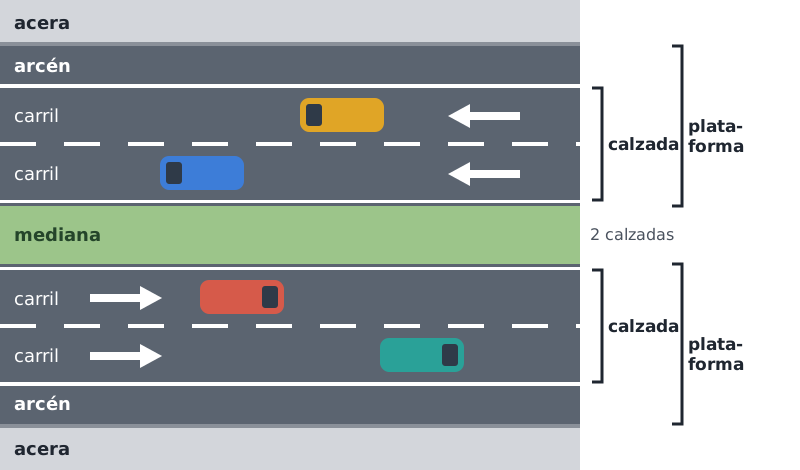
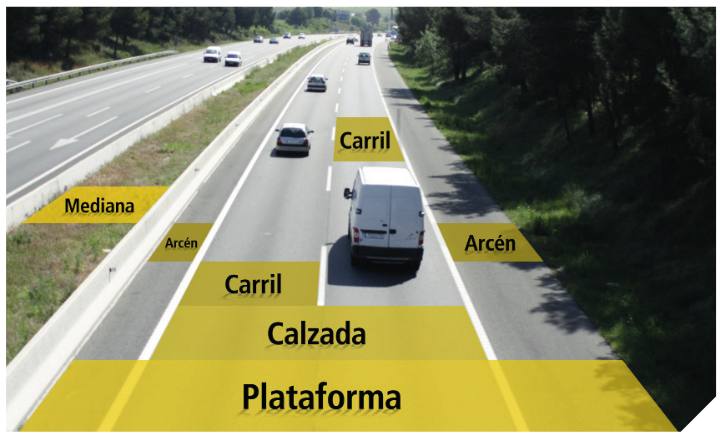
Carriageway
calzada
The part of the road for vehicle traffic; made up of lanes. Under 6.5 m wide it is a calzada estrecha.
Lane
carril
A strip of the carriageway wide enough for one row of cars (not motorcycles). Under 3 m it is a carril estrecho.
Hard shoulder
arcén
A paved strip next to the carriageway. Cars do not use it except in exceptional cases (breakdown, emergency).
Road platform
plataforma = calzada + arcenes
All of the road used by vehicles: the carriageway together with the hard shoulders.
Pavement and pedestrian zone
acera · zona peatonal · refugio
Acera is the strip for pedestrians. A refugio is a pedestrian island in the middle of the carriageway.
Central reservation
mediana
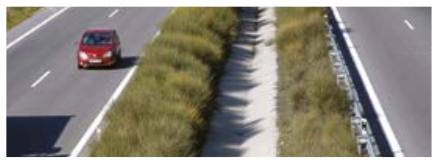
The strip between two carriageways that nobody drives on.
Other places on the road
| What it is | |
|---|---|
| intersección | junction at one level |
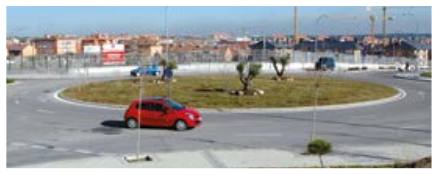
| glorieta | ring around a central island |
| paso a nivel | railway level crossing |
| isleta | traffic island |
| vía ciclista | cycle route |
Phrases
- Los turismos no circulan por el arcén.Cars do not drive on the hard shoulder.
- Esta calzada tiene tres carriles.This carriageway has three lanes.
- La plataforma está formada por la calzada y los arcenes.The platform is made up of the carriageway and the hard shoulders.
- Espera en el refugio hasta que el semáforo cambie.Wait on the pedestrian island until the light changes.
Road types
Where the road runs
Built-up area
poblado
An area with buildings, with entry and exit signs on its roads (S-500, S-510).
Urban road
vía urbana
A road inside a built-up area, except travesías.
Interurban road
vía interurbana
A road outside built-up areas.
Through-road
travesía
A stretch of a main road (carretera) that runs through a built-up area. If a bypass is available, it is not a travesía.
What kind of road
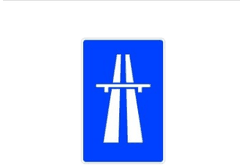
Motorway
autopista
Cars only. Neighbouring properties have no access; no level crossings or junctions; separate carriageways for each direction. May be a toll road (de peaje).
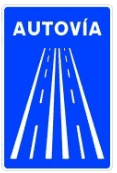
Dual carriageway
autovía
Like an autopista, but neighbouring properties have limited access. Usually free.
Road for motor cars
vía para automóviles
Cars only, one carriageway, no access at all from neighbouring properties. Signs S-3 and S-4.
Conventional road
carretera convencional
Any road that is not an autopista, autovía or vía para automóviles.
Road-type signs
 S-1
 S-1a
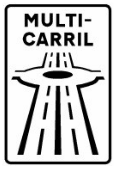 S-1b
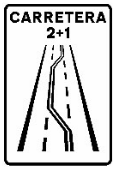 S-1c
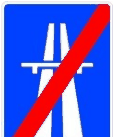 S-2
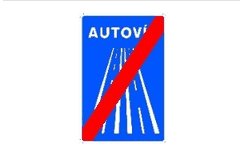 S-2a
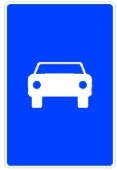 S-3
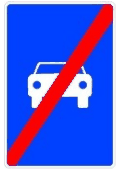 S-4
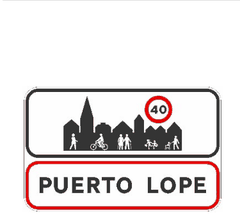 S-500 — start of a built-up area
 S-510 — end of a built-up area
Phrases
- Para circular por esta autopista de peaje hay que pagar.You have to pay to drive on this toll motorway.
- La travesía atraviesa el pueblo.The through-road crosses the village.
- Estamos en una vía interurbana, fuera de poblado.We are on an interurban road, outside a built-up area.
Vehicles
The key split: a vehículo de motor is anything driven by an engine except mopeds (ciclomotores), trams and vehicles for people with reduced mobility. An automóvil is a motor vehicle for carrying people or goods, except special vehicles (vehículos especiales).
Main kinds
Passenger car
turismo
For carrying people, at least 4 wheels, no more than 9 seats including the driver.
Bus or coach
autobús o autocar
More than 9 seats including the driver; for people and their luggage. A trolleybus counts as a bus too.
Lorry and van
camión · furgón
Both carry goods. A camión has a cab separate from the body; in a furgón/furgoneta the cab and the load space are one unit.
Moped
ciclomotor
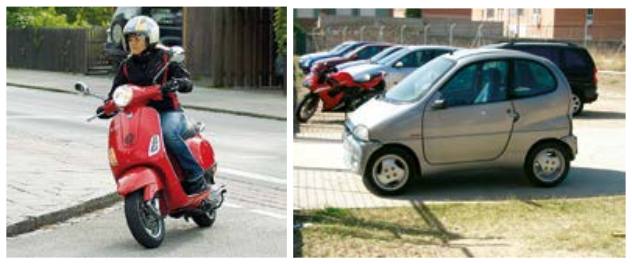
2, 3 or 4 wheels, design speed no more than 45 km/h, engine up to 50 cc (or an electric motor up to 4 kW).
Motorcycle
motocicleta
Engine over 50 cc and/or speed over 45 km/h. With a sidecar — motocicleta con sidecar.
Personal mobility vehicle
vehículo de movilidad personal (VMP)
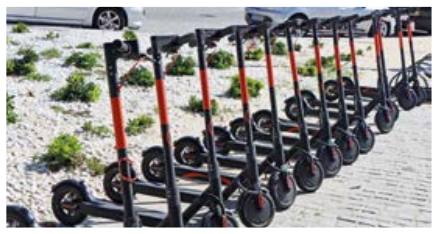
One seat, electric motor only, design speed between 6 and 25 km/h. For example, an e-scooter (patinete eléctrico).
Special vehicle
vehículo especial
Built for specific work: tractor, walking tractor (motocultor), construction and farm machines, quad-ATV.
Trailer and semi-trailer
remolque · semirremolque
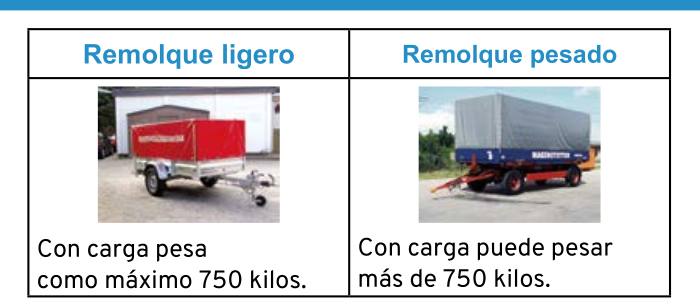
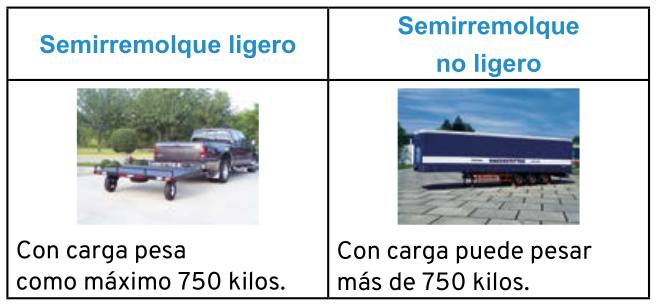
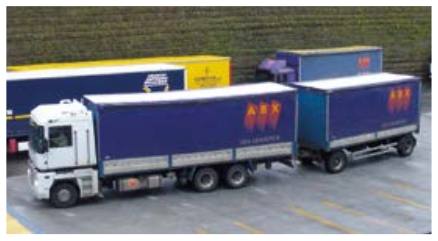
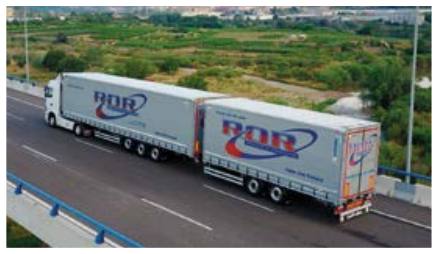
A trailer is towed; a semi-trailer partly rests on the tractor unit (tractocamión). A remolque ligero has a maximum authorised mass up to 750 kg.
Numbers the exam asks
| Limit | |
|---|---|
| turismo | up to 9 seats with driver |
| autobús | more than 9 seats |
| ciclomotor | ≤ 45 km/h, ≤ 50 cc |
| motocicleta | > 50 cc and/or > 45 km/h |
| VMP | 6–25 km/h, 1 seat |
| remolque ligero | MMA ≤ 750 kg |
| bici con pedaleo asistido | ≤ 250 W, up to 25 km/h |
An e-bike (pedaleo asistido: motor up to 250 W that cuts out at 25 km/h or when you stop pedalling) is a ciclo, not a moped or a PMV.
Phrases
- Un ciclomotor no puede pasar de 45 km/h.A moped cannot go faster than 45 km/h.
- El patinete eléctrico es un vehículo de movilidad personal.An e-scooter is a personal mobility vehicle.
- Mi coche lleva un remolque ligero.My car is towing a light trailer.
- El tractor es un vehículo especial.A tractor is a special vehicle.
People, mass
Who is who
Driver
conductor
Whoever controls a vehicle or leads animals. In a driving-school car the driver is the instructor at the dual controls.
Pedestrian
peatón
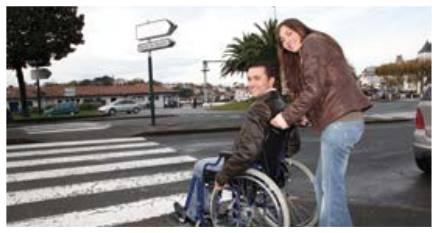
Goes on foot. Also pedestrians: people pushing a pram or wheelchair, walking a bicycle or two-wheeled moped, or moving at walking pace in a wheelchair (motorised or not).
Registered keeper
titular del vehículo
The person in whose name the vehicle is entered in the official register.
Usual driver
conductor habitual
The person who drives the vehicle most often, reported by the keeper with their consent. If the keeper has no licence, naming one is compulsory.
Mass
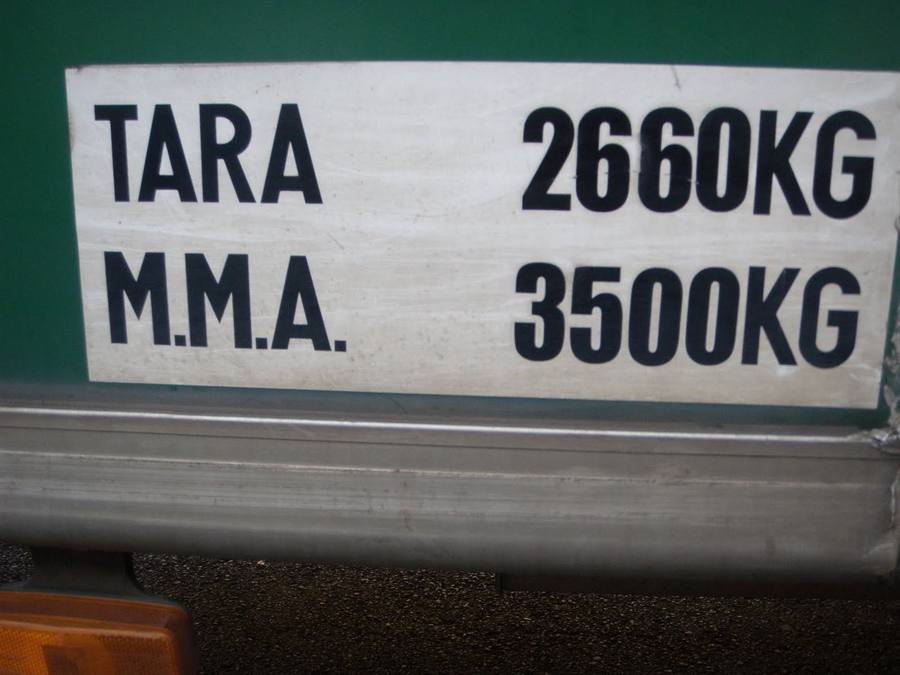
Tare
tara
The vehicle with fuel, fluids and tools, but without people or load.
Laden mass
masa en carga
The actual mass right now: with load, driver and passengers.
Max. authorised mass
MMA
The highest laden mass at which the vehicle may be used on public roads. Many rules depend on the 3,500 kg line.
Categories by use
| Category | What for |
|---|---|
| M | people and luggage |
| N | goods |
| O | trailers |
Vulnerable road users (usuarios vulnerables): pedestrians (especially children, older people, disabled people), cyclists, PMV riders, and riders and passengers of motorcycles and mopeds.
Phrases
- El titular del coche es mi padre.The car is registered to my father.
- Si empujas la bici a pie, eres peatón.If you push your bike on foot, you are a pedestrian.
- La MMA de esta furgoneta es de 3.500 kilos.This van has a maximum authorised mass of 3,500 kg.
More
Road users and persons
Conductor (driver) — the person steering or at the controls of a vehicle, or in charge of animals. In a learner vehicle the driver is the person in charge of the additional controls (the instructor).
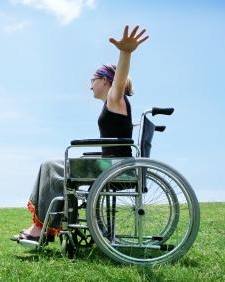
Peatón (pedestrian) — someone on foot, including a person pushing a small non-motor vehicle, a cycle, a two-wheel moped or a VMP. A disabled person in a wheelchair (motorised or not) at walking pace, and a person with reduced mobility using a VMP at walking pace, are also pedestrians.
Titular — the person in whose name the vehicle is registered. Tomador — whoever takes out the insurance contract. Usuario del vehículo — a person inside the vehicle. Vehículo — a device fit to travel on public roads.
Conductor habitual (usual driver) — a licensed driver in the drivers' register, notified by the owner or long-term lessee with their consent. From 1 October 2026 one must be named when a person without a licence registers a vehicle.
Usuarios vulnerables: pedestrians (especially children, elderly, disabled or reduced-mobility people), cyclists, VMP users, and riders and passengers of motorcycles and mopeds — they face a higher risk of serious injury.
Vehicle classification
Vehículos de motor (motor vehicles): automobiles — turismo, vehículo mixto, motocicleta, three-wheel vehicle, motor quadricycle, camión, tractocamión, autobús, trolebús; plus special vehicles (vehículos especiales: works, specific services, agricultural).
Propelled but legally not "motor vehicles": trams, mopeds (2 and 3 wheels), light quadricycles, vehicles for people with reduced mobility, pedal-assisted cycles and VMP.
Non-motor: ciclo, bicicleta, animal-drawn vehicles, trailers (remolques), semi-trailers (semirremolques), towed farm machinery.
Vehicle types: definitions
Ciclo / bicicleta — at least two wheels, propelled mainly by the occupants' muscle power (pedals); a bicicleta has exactly two. Ciclo de pedaleo asistido — electric motor up to 250 W continuous rated power; assistance cuts out when you stop pedalling and fades out before 25 km/h.
Ciclomotor de dos ruedas — maximum design speed 45 km/h, combustion engine no more than 50 cm³; electric mopeds exist too (displacement alone doesn't classify an electric vehicle).
VMP (personal mobility vehicle) — single seat, one or more wheels, electric motors only, design speed 6–25 km/h; a seat only with self-balancing. A motorised scooter is not a bicycle nor a pedestrian.
Automóvil — a motor vehicle normally carrying people/goods or towing (special vehicles excluded). Motocicleta — two wheels (with or without sidecar), combustion engine over 50 cm³ and/or design speed over 45 km/h (not a minimum travel speed). Turismo — carries people, at least 4 wheels and at most 9 seats including the driver. Autobús/autocar — more than 9 seats including the driver.
Vehículo especial — self-propelled or towed, for works or services, exempt from some technical conditions or permanently exceeding normal masses/dimensions: agricultural, works, services. Vehículo mixto adaptable — carries goods and up to 9 people including the driver, simultaneously or alternately (seats replacing cargo space).
Remolque ligero — trailer with MMA up to 750 kg. A semirremolque transfers a substantial part of its weight to the towing vehicle.
Tare and MMA
Tara (tare) — vehicle mass with its fixed equipment, without people or load, but with water, fuel, lubricants, spares, tools and accessories. MMA (masa máxima autorizada) — maximum authorised laden mass on public roads. MMA − tare = available payload, which also includes the driver and passengers.