DGT · Theory
DGT: Documents, licence and points
Licence classes, validity, points, vehicle documents and fines.
Documentación
Licence
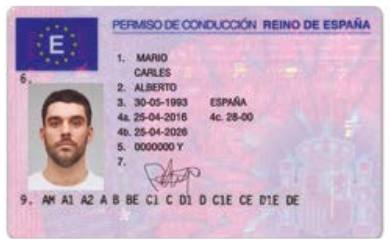
To drive you need four documents: the driving licence (permiso de conducción), the vehicle registration certificate (permiso de circulación), the inspection card (tarjeta ITV) and proof of compulsory insurance (seguro obligatorio). Carry the originals or copies certified by an official body (fotocopia compulsada).
Licence classes (RGCond art. 4)
| Class | What you may drive | Age |
|---|---|---|
| AM | mopeds, light quadricycles | 15 |
| A1 | motorbikes ≤125 cc, 11 kW | 16 |
| A2 | motorbikes ≤35 kW | 18 |
| A | any motorbike | 20 |
| B | cars ≤3,500 kg, 9 seats | 18 |
| B+E | B + trailer ≤3,500 kg | 18 |
What class B allows
Up to 3,500 kg
MMA ≤ 3.500 kg
A vehicle whose maximum authorised mass (MMA) is no more than 3,500 kg.
8 passengers + driver
9 plazas
No more than 9 seats including the driver.
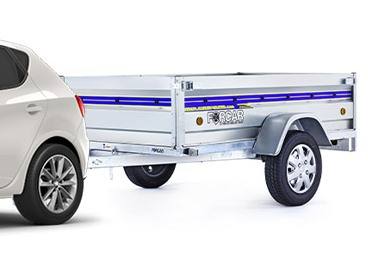
Light trailer
remolque ≤ 750 kg
A trailer up to 750 kg — always. Heavier — only if the whole combination is ≤ 3,500 kg (up to 4,250 kg after an extra test or course).
Mopeds and tricycles
Mopeds, motor tricycles and quadricycles. With a B licence older than 3 years — A1 motorbikes, but only in Spain.
Validity and new drivers
10 years / 5 years
vigencia
A B licence is valid for 10 years, and from 65 for 5 years. Renew it before it expires, after a medical check. An expired licence does not allow you to drive.
Conductor novel
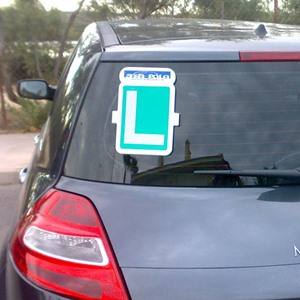
placa L (V-13)
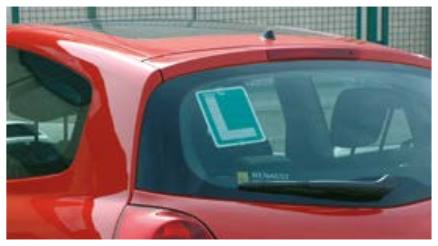
For the first year — a green plate with a white “L” on the rear window. For the first 2 years — a lower alcohol limit (0.3 g/l blood). Starting balance — 8 points.
- Para conducir un turismo necesitas el permiso de la clase B.To drive a car you need a class B licence.
- El permiso B tiene una vigencia de diez años.A B licence is valid for ten years.
- Debes pedir la prórroga antes de que caduque el permiso.You must apply for renewal before the licence expires.
- Durante el primer año llevo la placa L en el cristal trasero.During the first year I have the L plate on the rear window.
Points
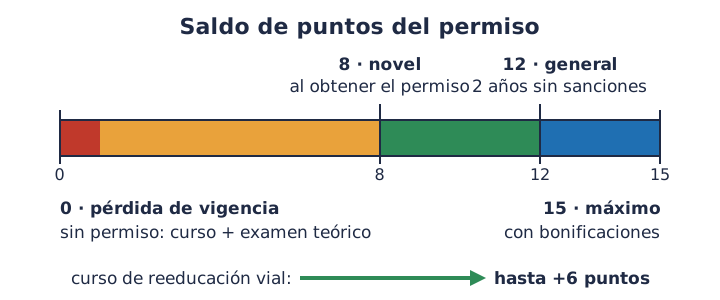
How points work
12 points
crédito inicial
A normal driver has 12 points. A new driver, or someone who got the licence again, has 8; after 2 years without sanctions — 12.
Up to 15 points
bonificación
No offences: +2 after the first 3 years and +1 after the next 3. A safe-driving course gives +2 more. Maximum — 15.
Only serious offences
pérdida de puntos
Points are taken for some graves and muy graves offences. In one day — no more than 8 points (except alcohol, drugs, refusing the test, wrong-way driving, etc.).
2 years or a course
recuperación
2 years without sanctions — back to 12 points. Or a sensibilización y reeducación vial course (12 h; by law at most 15 h) — up to +6 points, once every 2 years (professionals — once a year).
0 points — the licence loses its validity (pérdida de vigencia). A new one can be obtained after 6 months at the earliest (professionals — 3), after a course (24 h; by law at most 30 h) and the theory exam (LSV art. 71 and Annex III).
Points lost (LSV Annex II)
| Offence | Points |
|---|---|
| Alcohol > 0.50 mg/l | 6 |
| Alcohol 0.25–0.50 mg/l | 4 |
| Drugs in the body | 6 |
| Refusing the test | 6 |
| Wrong way, street racing | 6 |
| Radar jammer | 6 |
| Phone held in hand | 6 |
| Throwing burning objects | 6 |
| Passing a cyclist < 1.5 m | 6 |
| Stop, give way, red light | 4 |
| Dangerous overtaking | 4 |
| Signs and police orders | 4 |
| Safety distance | 4 |
| Belt, child seat, helmet | 4 |
| Wrong licence class | 4 |
| Driving while suspended | 4 |
| Reversing on a motorway | 4 |
| Illegal U-turn | 3 |
| Headphones, hand-held GPS | 3 |
| Radar detector | 3 |
- Al sacar el permiso te dan ocho puntos.When you get your licence you are given eight points.
- Por usar el móvil con la mano pierdes seis puntos.For using your phone in your hand you lose six points.
- Hizo un curso de reeducación vial y recuperó seis puntos.He did a road re-education course and got six points back.
- Si pierdes todos los puntos, el permiso pierde su vigencia.If you lose all your points, the licence loses its validity.
Documents
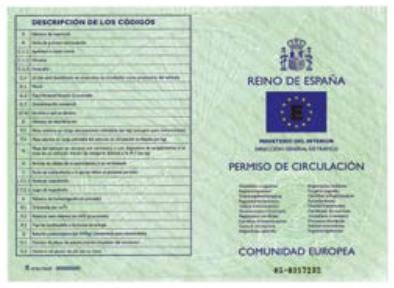
Permiso de circulación
matrícula y titular
Shows that the vehicle is registered and may be driven: owner, plate, registration date, seats, mass. Required for all motor vehicles, mopeds and trailers over 750 kg. Change of address — tell the DGT within 15 days, a sale — within 10 days.
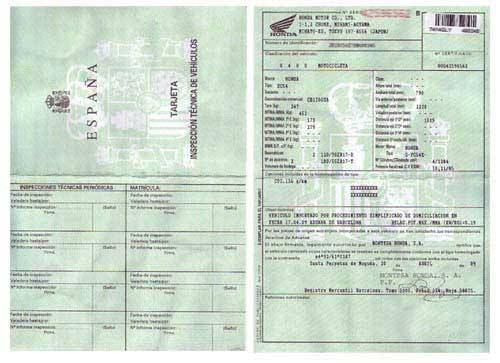
Tarjeta ITV
inspección técnica
Technical data and a record of inspections. After the ITV you get a sticker for the right side of the windscreen. A serious defect — you may not drive on, only to a workshop and back for a re-test.
Seguro obligatorio
responsabilidad civil
Covers damage to other people and their property. It does not cover the driver’s own injuries, things in his car, his family’s property or a stolen car. Report an accident to the insurer within 7 days. Without insurance the vehicle is impounded and the owner is fined.
When to pass the ITV
| Vehicle | First | Then |
|---|---|---|
| Car (up to 9 seats) | at 4 years | every 2 y; after 10 — yearly |
| Two-wheel moped | at 3 years | every 2 years |
| Motorbike | at 4 years | every 2 years |
| Van up to 3.5 t | at 2 years | 2 y; from 6 — 1 y; 10 — 6 m |
| Towed caravan | at 6 years | every 2 years |
The distintivo ambiental is the DGT environmental sticker: 0 (blue, electric), ECO (hybrids, gas), C (green), B (yellow). The oldest cars get none. Restrictions in low-emission zones (ZBE) and during pollution episodes depend on it; breaking them is grave (LSV art. 76 z3).
Sign
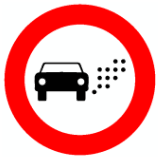 R-120 — No entry depending on the environmental sticker; the conditions are on the panel below.
- Lleva siempre el permiso de circulación en el coche.Always keep the registration certificate in the car.
- La pegatina de la ITV va en el lado derecho del parabrisas.The ITV sticker goes on the right side of the windscreen.
- El seguro obligatorio no cubre las lesiones del conductor.Compulsory insurance does not cover the driver’s injuries.
- Mi coche híbrido tiene la etiqueta ECO.My hybrid car has the ECO label.
Fines
Three kinds of offence (LSV arts. 74–80)
Leves
hasta 100 €
Anything the law does not call serious: for example, a bicycle without lights. No points lost.
Graves
200 €
Phone, seat belt, distance, red light, stop sign, dangerous parking, speeding, etc. Often — points lost.
Muy graves
500 €
Alcohol, drugs, refusing the test, wrong-way driving, reckless driving, driving without a licence. Alcohol over double the limit or repeated within a year, drugs, refusing the test — €1,000.
50 % discount: if you pay on the spot or within 20 calendar days of notification. In exchange you give up your objections and the case is closed (LSV art. 94). Points are still deducted.
Speeding (LSV Annex IV)
| Limit 50 | Limit 120 | Fine | Points |
|---|---|---|---|
| 51–70 | 121–150 | 100 € | 0 |
| 71–80 | 151–170 | 300 € | 2 |
| 81–90 | 171–180 | 400 € | 4 |
| 91–100 | 181–190 | 500 € | 6 |
| 101+ | 191+ | 600 € | 6 |
The person who committed the offence is responsible. But for a minor under 18 the parents or guardian pay. The vehicle owner (titular) is responsible for the documents, the ITV and the technical condition.
- Una infracción grave se sanciona con 200 euros.A serious offence is punished with a 200-euro fine.
- Si pagas en veinte días tienes un descuento del 50 %.If you pay within twenty days you get a 50 % discount.
- El titular del vehículo responde de la ITV.The vehicle owner is responsible for the ITV.
- La multa de un menor la pagan sus padres.A minor’s fine is paid by his parents.
More
The B licence
A B licence lets you drive:
1) mopeds (2 and 3 wheels) and light quadricycles;
2) automobiles up to 3,500 kg MMA and 9 seats including the driver: cars, mixed vehicles, motor tricycles, quadricycles, goods vehicles and motorhomes. Minimum age 18; motor tricycles over 15 kW — 21;
3) special vehicles: agricultural of any mass; non-agricultural (works/services) up to 3,500 kg MMA — heavier ones need the licence for their MMA. For carrying people: B up to 9 incl. driver, D1 10–17, D more than 17. The old entitlement to drive any non-agricultural special vehicle not exceeding 40 km/h survives only for B licences obtained before 8 December 2009.
4) With a trailer: light trailer (MMA ≤ 750 kg) — B is enough (within the vehicle's towing limits), e.g. a 3,500 kg vehicle + trailer up to 750 kg. Trailer over 750 kg: B — if the combination's MMA is no more than 3,500 kg; B with code 96 — combination over 3,500 and up to 4,250 kg, after passing the required test; heavier — B+E or another licence. The old condition comparing trailer MMA with the towing vehicle's tare no longer applies.
5) A B licence held for more than 3 years allows driving A1 motorcycles in Spain (up to 125 cm³, 11 kW and 0.1 kW/kg) — valid only within Spain. After 2 years, an additional national authorisation allows certain alternative-fuel goods vehicles without trailer up to 4,250 kg MMA, provided the excess over 3,500 kg is due to the propulsion system and doesn't increase payload. B+E — a category B towing vehicle with a trailer or semi-trailer up to 3,500 kg MMA, within the vehicle's technical limits.
Other licences
A1 — from 16: motorcycles up to 125 cm³, 11 kW and 0.1 kW/kg (with or without sidecar), motor tricycles up to 15 kW. A2 — from 18 (also for A1 holders): motorcycles up to 35 kW and 0.2 kW/kg, not derived from a vehicle more than twice as powerful; no displacement limit. A — from 20 with at least 2 years on A2 and the required training: any motorcycle; motor tricycles over 15 kW from 21.
AM — from 15: two- and three-wheel mopeds and light quadricycles. A moped may tow a trailer up to 50 % of its unladen mass: no passengers in the trailer, by day with good visibility, speed limit −10 % (municipal rules in towns).
LCM — from 14: vehicles for people with reduced mobility; with a passenger from 16. A1 or B licences also cover them. LVA — from 16: self-propelled agricultural vehicles and combinations within normal masses/dimensions with design speed up to 45 km/h; beyond those limits a B licence is needed (B also covers everything in LVA).
Novice drivers
The L plate is required during the first year after obtaining your first driving authorisation (with exemptions for previously held licences). Display it at the rear, normally on the left, clearly visible. Novices have the same speed limits as everyone else.
For the first 2 years after the first licence, reduced alcohol limits apply: 0.15 mg/l exhaled air or 0.3 g/l blood; drivers under 18 — 0.0. Time on LCM or LVA counts only for the vehicles those cover and doesn't shorten the reduced-limit period for a new B.
Licence validity and points
AM, A1, A2, A and B licences and LCM/LVA licences are generally renewed every 10 years until 65 and every 5 years from 65. An expired licence does not entitle you to drive; medical conditions may require shorter validity.
8 points — starting balance for novices and for those who recover the licence after losing all points; also the maximum normally lost in one day (except specific offences where this cap doesn't apply).
After 2 years without final penalties involving point loss, the balance rises to 12. Another 3 years clean — 14, another 3 — 15. Approved safe and efficient driving courses can add 2 points, up to a maximum of 15.
Recovery: partial — a 10-hour course recovers up to 4 points (normally once every 2 years, professionals once a year). Total loss — 20-hour course, a period without driving (usually 6 months, 3 for professionals; longer for repeated losses) and a theory test; then the balance is 8 points.
Vehicle documents
Carry (valid): your driving licence, the registration certificate (permiso de circulación) and the inspection card (tarjeta ITV). The insurance policy and receipt need not be carried. A trailer needs its ITV card; if over 750 kg MMA also its own registration certificate, number plate and insurance.
Originals or officially certified copies are accepted. In Spain the licence and registration certificate in the miDGT app have the same legal validity as the physical ones.
Report a change of address to the DGT within 15 days. The seller must report the sale within 10 days, identifying the buyer; the buyer must apply for the change of ownership within 30 days.
Permiso de circulación is compulsory for automobiles, mopeds and trailers/semi-trailers over 750 kg MMA. It contains owner and vehicle data (plate, first registration date, MMA, seats…). The first registration date sets the first periodic ITV; later dates are recorded in the ITV documents.
Tarjeta ITV is compulsory for automobiles, mopeds and trailers, including light ones. It holds technical data (mass, tare, MMA, width…) and the authorised towing capacity; it exists before the first periodic inspection.
Technical inspection (ITV)
Results: favorable — the vehicle may be driven, minor defects must be fixed; desfavorable — may only be driven to the workshop and back to inspection within the set period; negativa — the vehicle must be taken for repair and re-inspection by other means (not under its own power). A car's age counts from its first registration.
Frequency:
• Private cars: first 4 years exempt; 4–10 years every 2 years; over 10 yearly.
• Motorcycles, motor tricycles, quadricycles: first 4 years exempt; then every 2 years.
• Goods and mixed vehicles up to 3,500 kg: first 2 years exempt; 2–6 years every 2 years; 6–10 yearly; over 10 every 6 months.
• Two-wheel mopeds: first 3 years exempt; then every 2 years.
Compulsory insurance and liability
Driving without compulsory insurance can lead to a fine, immobilisation and impounding. Compulsory third-party liability is needed for motor vehicles and mopeds; trailers need their own policy over 750 kg MMA. VMP must also be insured under 2026 rules.
It covers personal injury and property damage to third parties, with legal exclusions. Injury: covers occupants and other victims, but not injury or death of the at-fault driver. Property: excludes the insured vehicle itself and goods carried in it, and property of the policyholder, insured, owner or driver, their spouses and relatives up to the third degree.
Summary (at-fault driver): the driver — injury NO, property NO; policyholder (tomador) — injury YES, property NO; others — injury YES, property YES (save exclusions). Theft of your own car is not covered; victims of a stolen vehicle are compensated by the Consorcio de Compensación de Seguros.
VMP must be registered with the DGT and carry their ID label before use, plus insurance. Non-certified VMP sold before 22 January 2024 may use the transitional regime only until 22 January 2027; registration doesn't extend it.
Who is responsible: the driver — for offences while driving; the owner (titular) — for documents, insurance and vehicle condition incl. ITV; an adult occupant — for not wearing their own belt; the driver — for correct use of child restraints (with exceptions), passengers' helmets and carrying passengers under the minimum age.